[00:00:00] Speaker A: As the world changes, so does leadership.
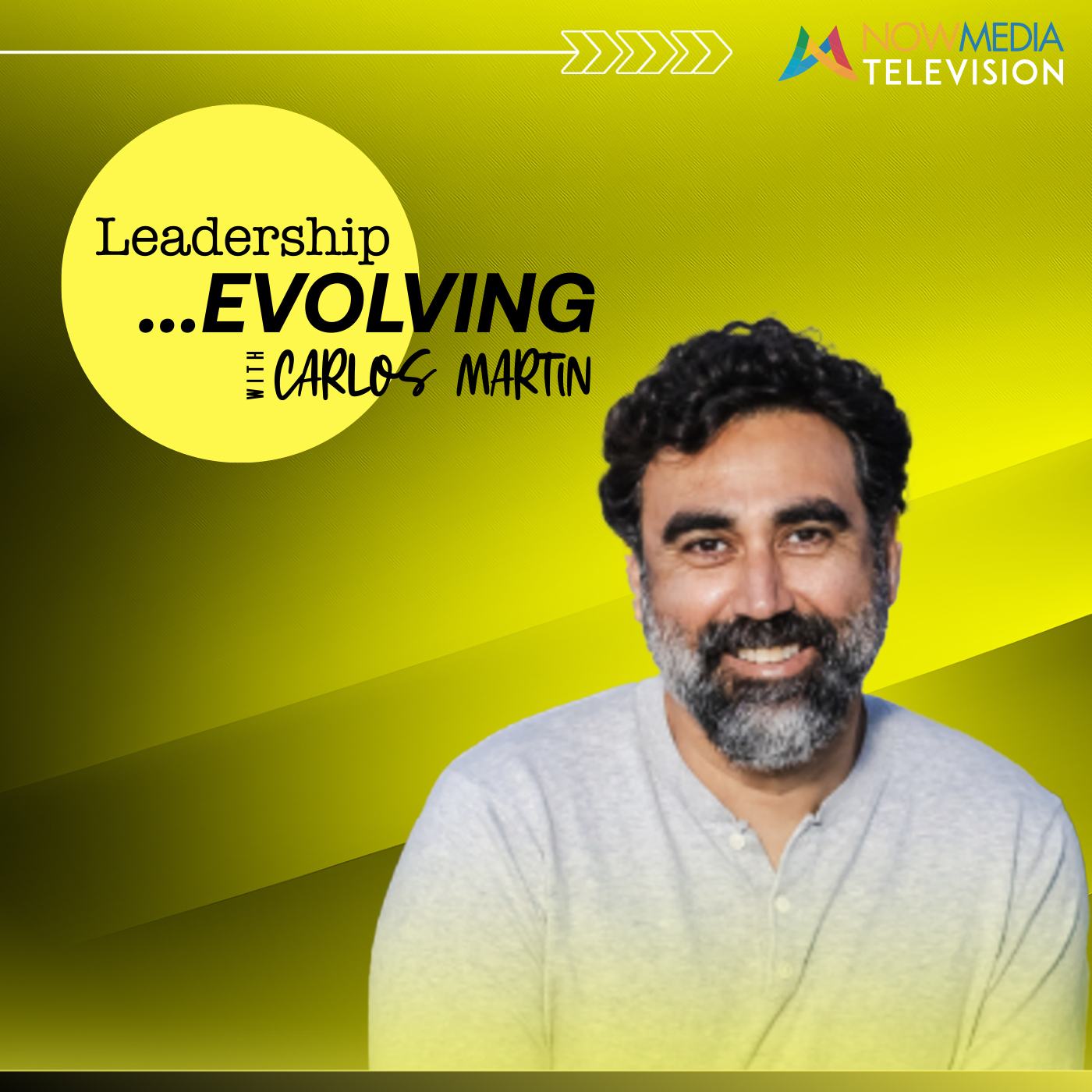
[00:00:04] Speaker B: Hello, I'm Carlos Martin, host of Leadership Evolving on NOW Media Television.
On Leadership Evolving, we bring you real
[00:00:12] Speaker A: talk about mindset, resilience, culture, influence and purpose.
[00:00:18] Speaker B: Every episode features thought leaders, innovators and everyday visionaries sharing insights, experience and strategies you can use.
Let's explore how your voice can help others evolve their leadership.
Watch Leadership Evolving on NOW Media Television and step into the leader you are becoming.
And today we explore what it takes
[00:00:42] Speaker A: to lead with purpose and impact.
[00:00:45] Speaker B: Leadership today evolving tomorrow.
[00:00:50] Speaker A: Welcome to Leadership Evolving where we explore how great leaders grow, adapt and step into greater levels of influence. I'm your host, Caros Martin. Today's guest is Marilyn Jenkins, a digital growth strategist and founder of Law Marketing Zone. Since the early 1990s, she's helped law firms scale through strategic marketing across paid ads, SEOs, and Google Business optimizations Optimization. Excuse me. Her work has driven seven figure growth and ROI exceeding 14x for her clients. She's also the host of the 5% podcast Leadership and Law and publish an author of three published author, excuse me, of three books.
Marilyn, welcome to the show.
[00:01:31] Speaker C: Thank you so much. I'm excited to be here.
[00:01:34] Speaker A: Awesome. Thank you, thank you. So many things to talk about. I want to be able to kind of go inside your brain, inside your, your wisdom brain and talk a little bit about leadership and what that looks like from, from your perspective, from your angle and so forth. So many leaders pride themselves on being hands on. I know, I used to be one of them. How do they recognize when doing everything is actually very limited on their growth?
[00:02:03] Speaker C: I think with business owners it's one of two things. Either you are working 70 hours a week and you just can't take on one more job or one more thing, or you notice that you, you're saying no to opportunities.
You know, that's, it's, I mean, it's two visions of the same thing. But you know, I've had clients that build out at $400 an hour, but they're spending 15 hours a week doing administrative tasks.
So how much money are you losing, you know, because you're not delegating or you're not bringing someone in. So it comes that how are you just working a job? You just happen to be working for yourself or are you leading a company to grow now?
[00:02:42] Speaker A: Do you find that that's usually with kind of new, new managers, new leaders? Is that something that we kind of learn over time?
[00:02:52] Speaker C: I. Yeah, I think we, we do come in into that when we learn that because I Mean, let's face it, you built this on your own growth, on your own skills. Right. Who can do it better than me?
[00:03:05] Speaker A: Yeah.
[00:03:06] Speaker C: Right. So we have to get to the point where we say, okay, I can either do everything or be involved in everything, or I can find someone who would do it almost as good as me, and let's move on.
[00:03:16] Speaker A: Yeah, right. Yeah. Speaking of that, I had a client that she had that situation, and her thing is, how do you build that structure in order for you to lead properly and do it once and you can rinse and repeat and how otherwise you become that bottleneck and you want to be able to control everything. And as new managers, I was once that person myself many years ago.
We want to have. We want to control everything. But the other thing is, when we are thrown into leadership, I feel like, oh, you've been doing great on your own. Now let's put you as a. As a manager, but there is no traffic. I mean, it's great to do that, but then again, we're not really necessarily equipped to be able to do that.
Fantastic.
So, Marilyn, in your experience, when you, When I, When I'm thinking about leadership, how has that come up for you in. In your early years and now and what you are doing now? If you could tell us a little bit of that evolution and how that showed up before and how it is for you now as a, as a
[00:04:22] Speaker C: leader, I was the classic person that started a business that did everything myself, right? And it's like, I can do it faster. You bring in someone that can do a job that is, you have to look at your hourly rate, what is your value, and what are the things that you don't enjoy doing that you can hire somebody that makes less money to do.
Well, if you're like me and you're just, like, steamrolling ahead, I could just get it all done. And then you end up not giving that person anything.
So it was a big education for me.
Coaching, books, those kinds of things, and realizing that I was the bottleneck. And I've had clients in the exact same place. Right.
Once you figure out, okay, I am the bottleneck, what can I do? I've got to bring in a team.
I've got to decide first off, systems, processes. So I want to hand off something that someone will do like I would do. And if I find someone that makes 80% of the decisions I would make, that is a great place to be.
Right. I can help with the other 20%.
But it, to me, it was realizing that I could only My business can only grow so much if I did everything okay and, and accepting that's not what I want.
[00:05:36] Speaker A: Yeah. Now that reminds me of my early years as an entrepreneur. Is that great? You want to have a team, but it's also very difficult when you are the person, you are the salesperson, you are the coach, you are the publisher, you are the marketer.
And having a team is ideal.
But when you're starting off, it's difficult either from finances, for not knowing that type of thing.
If I were to tap into your leadership wisdom, if you could put yourself back there, what's a good way to go about it when you feel stuck between, well, I'm an entrepreneur, I should be doing everything, but it's somehow at some point I need to transfer, delegate. But it's that tipping point.
[00:06:26] Speaker C: Well, I think one of the things that I did is actually step back and say, okay, these are the things I do for each client from the time a client comes in until they're on their way and things are working really well. And make systems out of that as standard operating procedures. Right. Mine started out as checklists, as simple as a checklist. Okay. These are the step by step. And you got to make it step by step so that when you hand it off, you're not missing a step.
[00:06:52] Speaker A: I see.
[00:06:53] Speaker C: So. And that was the first thing that happened is, okay, now these are the things. Now what are the things I don't need to be involved in?
That's the next step. Do I need to do everything?
And clarity, absolute clarity. And then when you have someone to take over those pieces, you need to give them the confidence that they can do it, but also not just the task to do, but the responsibility to do it and the accountability to do it correctly.
[00:07:22] Speaker A: Okay.
[00:07:23] Speaker C: You're building trust.
[00:07:24] Speaker A: Yeah. So there's a little bit of a hand holding structure and so forth that you have that really almost like, this is my vision now. This is my vision on paper. Go ahead and run and run with it. I like that.
What mindset or what mindset shift rather must happen to move from operator to leader without feeling loss or, you know, feeling loss of control, if you will.
[00:07:51] Speaker C: Well, I think as a, as a business owner, that's, this is your identity. This is the version that got you to where you are now. Right. This is what's won so far. And that's the identity that you have. And I think it's, it's, it's who you are professionally. And then you have to realize at some point, okay, it's still going to be me, but I want more.
And when you decide you want more, that's whenever you have to go, Okay? I am still professional. I am still the one that went this far. But my goals are bigger.
And for me to achieve those, I need help.
[00:08:26] Speaker A: Got it. Okay. Well, thank you, thank you for, for those insights.
I think I'm just going to go right into the outro now.
All right, well, thank you, Marilyn. We'll be right back. Up next, why leaders visibility feels uncomfortable and how to turn it into a service instead of a self promotion. We'll be right back with more insights,
[00:08:48] Speaker B: stories and transformative leadership conversations. Stay with us. Leadership Today Evolving tomorrow.
[00:08:56] Speaker C: Carlos.
[00:08:56] Speaker B: I'm Carlos Martin and this is Leadership Evolving on NOW Media Television. Let's continue the journey.
[00:09:02] Speaker A: And we are back.
[00:09:03] Speaker B: Leadership Today evolving tomorrow.
[00:09:06] Speaker A: Welcome back to Leadership Evolving. We're here with Marilyn Jenkins talking about how leaders grow their influence and how that often requires stepping into the greater visibility. Why do capable leaders hesitate to put themselves out there?
[00:09:21] Speaker C: Um, again, I think the identity that you take when you've grown a business, you have a business, you've grown it, you've got it to a point where you want to go much further. Your identity is how you got here. This is, you know, you built a half a million dollar business or a $2 million business, whatever, and that's what got you to this place.
So I think it's the hard part is, is realizing the new version of you needs to, to bring other people on.
Right? You need to start being the person that works on your business, not in it. And that identity shift is a little bit uncomfortable, but it's a growth pattern that we have to do if we want to attain more. I worked for a company at one point that got stuck at 7 million a year revenue.
So they paid a consultant to come in to see what's wrong. Well, the CEO needed to be involved in every single decision and she had no more time.
And she didn't like that answer. But that was the point. You need a new. You want to grow. You need to have a way of letting go of the reins. And so that is uncomfortable, but it also, the choice is you either live a lifestyle that you currently have, which is overworked and underpaid and no growth, or you step back and go, okay, I want more.
I will grow as an individual to have that.
[00:10:43] Speaker A: Okay, now you bring up the word identity, and that's something that comes up all the time with my clients and something that I dive deep for our audience.
When you use a Term identity in this case, can you explain a little bit what that means and how you see that so our audience could understand a bit better?
[00:11:04] Speaker C: I think to me, my identity is not, you know, the stuff you grew up with, that the, the baggage you carry around. It's what I feel like I am in my business, right. My identity is what my clients see as the success we bring and the teaching that I do and all of that kind of thing. And so, but at the same time, my identity is, is not just as the business leader that won all of this, that's made this for my clients over delivers, but I also want to be a leader. And to be a leader I need to realize that I don't have all the solutions.
And that's where you have to look at all sides of yourself. You know, you're, you have to be vulnerable at times, you have to be delegate diplomatic at times. But your identity needs to be or is what you feel is your best and worst parts.
And when you start growing as a leader and growing your business, your identity shifts a bit. You're not always the doer, you're now the leader that teaches and releases some of that responsibility.
[00:12:08] Speaker A: Next. Next question that comes up for me, Marilyn, is how can leaders reframe visibility from bragging to service to serving? I remember as a young leader I, there was a little bit of bragging like, oh, I'm the new manager and as I got, you know, there's a little bit of salt and pepper, a little more salt and pepper now. And as I got a little bit older, as I started to manage numbers and lead people, I realized I went from bragging to serving.
And it took me a long time to learn that, you know, either through emotional intelligence, through years of what to do, what not to do, how does that show up for you and what's your thought process on that and how do you see that happening?
[00:12:57] Speaker C: I, I felt like for me it was probably more of a easy transition. So in the beginning you're rah rah what you can offer, right? And that's seems a bit bragging, but if, if you, if no one else is your cheerleader, you gotta be your own, right?
And, but I think whenever you, you also start realizing, okay, people are realizing it and I'm serving people and I'm giving them great service and I'm growing my business.
That's whenever what you do starts speaking for itself instead of you having to speak for yourself, you know, providing that world class service, having a world class team that provides over delivers for Your clients, that starts again, referrals, reviews, those kinds of things start speaking for you and so you don't have to, you know, that's where the visibility changes. You're always going to talk about how great your people are, how great your clients are in the service that you provide, but it's not the main point. Talking point. Your service does at that point.
[00:13:54] Speaker A: Got it. And it could go from a personal bragging about me into bragging about my team, which is very, very different.
But yeah, no, I totally see your point. I love that.
How does visibility change how others perceive a leader's authority?
[00:14:13] Speaker C: I think it's communication with your team, you know, and it also the culture that comes out, you know, instead of assigning a task and like demanding, I need this done by Tuesday, and then just walking away, explain, you know, it takes like maybe five more words. You know, we're onboarding a new client. We need to get this organized by Tuesday.
That simple change in the wording. You brought your entire team on to the task for this, this brand new client that's coming on. So it's. It growing as a leader is growing your communication.
[00:14:46] Speaker A: Yeah, no, I, I couldn't agree with you more. And it's one of those things that for whatever reason, we don't really put a lot of value in it. Right. Because we treat people as a. As a number, like, get this thing done.
But what. Why not treat an individual as a human, to have that human and human interaction opposed to get this thing done. Imagine if you were to do that to your significant other. It's probably not going to work all that great, but somehow I don't know how we got here, where things are so robotic and it's roi. Instead of having a really meaningful conversation and see that person, like you said, spend that extra two or three minutes. Hey, Marilyn, this is what I'm envisioning. How can we make this happen? Opposed to, here you go, make that happen.
Right. That's. So that's a disconnect. So for me, when I talk to individuals, with my clients, with guests, is how do we bring the humanity back into the workplace? I don't know if it was ever here in the workplace. So what are your thoughts when you work with leaders? Is that something that comes across your table to be able to bring that softness, that emotional intelligence, that people version into our team? Because I completely agree with you.
[00:16:00] Speaker C: Yeah. And I think one of the things that I've run into is, is when you're talking about team members and say a client is Talking about this team member just isn't. Isn't bringing it right.
Not. Not prepared. They're just not following through. And instead of being berating to that person, and I don't mean that in a bad way, but instead of always saying the negative thing or wondering, why aren't you doing this?
Have a conversation with them. Be that real person. So what's going on with you? You know, how many people, how many of you out there that are listening or watching this have ever asked your team members what their goal in life is and their goal with their job? So it could be that this person that's just not performing, they may be going through an emotional crisis in their own life. It could be, you don't know, we don't know what's going on under the, under the surface. But it could be just by having that conversation, opening yourself up to saying, how is it going, Carlos? What? You know, how are things going for you? You find out, oh, it's not that he doesn't care. He's got a crisis he's working with and he's not bringing it. He's trying not to bring it to work again. Humanity, communication. And as a leader, you have to start having these conversations with. Because you're not the only one that matters anymore.
[00:17:17] Speaker A: Yeah.
[00:17:17] Speaker C: You treat them like they don't matter. Your service level is going to go down, your clients are going to turn, and people are just going to understand that your reputation is not of a caring team.
[00:17:28] Speaker A: Yeah, I keep nodding here because I feel like I'm listening to myself.
You're absolutely right as a leader.
I remember an old boss of mine told me, like, carlos, what are you doing? You have the lowest turn rate.
Like, I don't know. And I didn't really know. I didn't really.
I wasn't really paying attention.
And so people weren't leaving the job. They weren't leaving me, which is, okay, fantastic. And what I realized is that I was treating people like people, like you said.
So you reminded me of situation, of this top leader that I had. I was an RVP when I left, when I worked in corporate.
I don't miss it.
And you know, from other previous managers, managers that she had, it was more of, hey, the numbers are not there. What's going on? And I remember flying, flying there to her and I, and let's have a meeting. And she immediately said, well, I'm sorry, I know the numbers are, you know, not there. I'm like, I'm not here for that.
I'm here for you, what's going on?
And she said, well, you know, I'm working hard and I know my numbers are usually here, but now they're here. I said, I get it. I'm not here for that. What's going on? And I really went there for her as a human being, as, you know, as someone that I, that I invest in my people. And then it came out that she was having some issues at home after that. I said, I'm sorry, are you okay? We'll give you two or three days time. I can't remember exactly the details, but after that she took some time off. She came back with a vengeance, and she really appreciated that. She said, carlos, thank you so much for being there and listening. And that's all it took.
Somehow we complicate things as leaders.
Right. We try so hard to that roi, you need to do this and talk numbers. And we live here.
It's okay to live here when. Now we need to live.
[00:19:30] Speaker C: Some people worry about going at the pendulum swinging the other way now. I want to be, you know, now I'm afraid they're going to make me therapist and that's not it.
No.
[00:19:39] Speaker A: Being.
[00:19:39] Speaker C: Being open and understanding and asking these questions and getting to know your team and their motivations does not mean it's going to be, you know, these kind of conversations all the time. Yeah. It's not a stronger team.
[00:19:52] Speaker A: Yeah, exactly. You don't go into therapy mode, but as a manager, as a leader, you're. You have to be a people person.
Yeah, right. How do you understand your individuals? How do you, how do you motivate them? Because they're all different. We're all different.
You might be, get. You might be motivated in a different way that I get motivated, and that's okay. It's not a wrong. Right, right. It's both. And so it's like, how do you teach emotional intelligence. Right. Empathetic to saying, hey, what's going on? Like you said, you know, bringing, you know, bringing that humanity back into the workplace. How can leaders build confidence in showing up. Up over time? Marilyn,
[00:20:36] Speaker C: build confidence by showing up over time?
I think consistency.
[00:20:40] Speaker A: Okay.
[00:20:41] Speaker C: Right. So if you are. And I'm, I'm assuming the question is how do we build confidence in our team?
Right. Is my. That makes a bit.
Yes.
[00:20:50] Speaker A: Thank you.
[00:20:51] Speaker C: Yeah. I, you know, you bring somebody in. You, you've built this, you've done all of this, and you're bringing somebody in. They see that excellence of what's brought this to, to this point.
So you have to continue that while teaching them and with an, with a, not a, not a, like you said, all of the numbers in the head. But you know, with the communication by you bringing your communication with the, the excellence that you have will show them and you'll get that credibility will continue to grow and their credibility, their confidence in you and in their job will continue to grow.
[00:21:28] Speaker A: Marilyn, where can leaders follow your work and learn how you grow their presence with purpose?
[00:21:35] Speaker C: Absolutely. You can find out more about me at Leadership. Leadership in Law is my podcast
[email protected] is my website. I do a full service digital marketing for local businesses and help them grow and be found in the Google map pack and through paid ads. My brand is torch law firms, but everything I do iterates exactly. For any local business that needs to be found at the top of the search engines.
[00:22:02] Speaker A: Oh, I love that you have that down. Thank you for that, Marilyn. Coming up next, the courage it takes to grow the version of yourself that first made you successful. We'll be right back with more insights,
[00:22:15] Speaker B: stories and transformative leadership conversations. Stay with us. Leadership Today Evolving Tomorrow.
[00:22:22] Speaker C: Carlos.
[00:22:22] Speaker B: I'm Carlos Martin and this is Leadership Evolving on NOW Media Television. Let's continue the journey.
[00:22:28] Speaker A: And we are back.
[00:22:30] Speaker B: Leadership Today Evolving tomorrow.
[00:22:33] Speaker A: Welcome back to Leadership Evolving. Growth requires change. And for leaders, that often means evolving beyond an old identity that once felt safe.
All right, Marilyn, we were just talking about identity.
So my next, my next question to you is why is it so hard for leaders? I know it was hard for me to let go the version of themselves, their old selves that first made them successful.
[00:22:59] Speaker C: I think again, it's, it's, it's that drive that got you to where you are, is now who you are.
And you know, it's when you finally realize that, okay, I can't get to the next step until I change, until I morph into something different.
And that's where you have to, you know, it can be a grieving process. It's like, I really don't want to share the work. I'm really going to really enjoy this. And you know, it's just, and, and the hard part is, is the new version of yourself hasn't been proven yet. So it's also kind of scary. Yeah, you, you decide I have to, I have to be a manager as well. I have to be a leader. I have to have someone else help me do this. So it is a different identity. It's a different way of, of becoming successful. And you've, it's a change and people don't like change, especially if what you've done, who you are, has gotten you to this point. But if you want to grow, you're going to have to change.
[00:23:56] Speaker A: Yeah, it's, it's funny when I talk to clients, you know, our identity is what got us here, which is fantastic.
But now does that, does that identity still, is it, is it still useful to go into your new, a new path?
And a lot of it is okay.
[00:24:20] Speaker C: I think a lot of it is because you have to, you know, if you, if you, unless you change businesses, if what you are got you here, you know what it's going to take. But you, what got you here will not get you double your revenue. Yeah, but so you can keep part of that identity because you have to, that's what brought you here.
But you have to be able to expand. To expand.
[00:24:40] Speaker A: Yeah, I agree with you. When I, when I, again, when I see my clients is they want to keep that identity a hundred percent. Because it got me here, it got me with success. Success, which makes sense. But a lot of the times I've noticed that people get stuck because they want to do exactly what they did. Because, look, it's proof that it worked. But now you might go from manager to director, you might be in a different career, whatever it is.
And sometimes, I'm not saying you need to, but sometimes you ought to tweak, change, modify, and you could quantify that 10%, 20%, 50% of how you write your old identity. You mentioned the word grief.
And I remember when I left corporate, I was an rvp and I was that guy traveling, two phones, hundreds of emails and so forth. And part of it, yes, I loved it. But when I left corporate, I remember for the first month I was pretty happy. I'm like, okay, I'm done.
But after that, I was lost. I kid you not, I, I, I was going through a grieving process of my old identity. And when I tell this story to some people, some people say that's a little weird, but it was because I was so attached to what I did for a living once that part of me left or I let go, I was lost.
And I realized at that point is that what I do for a living does not identify who I am.
Now I am Carlos Martin. That happens to be an executive coach, right? That happens to be doing executive coaching. That is a co founder at Continuum, that I'm doing all this. But it doesn't necessarily define me because I notice when I'm, I attach myself to that. If that changes, then I'M a little lost if I said to my core who I am.
You know, hopefully a good son, a great friend, hopefully a decent podcaster. Right. Okay, I could identify to that. But how do you stay fluid, opposed to having that fixed mindset of this is who I was, this is who I am, and this is who I'm going to be.
And I think that creates a little bit of limiting beliefs and that rigid mindset. What are your. I know I give you a lot there. A lot of. A lot of layers to that sandwich, I think.
[00:27:02] Speaker C: And this is probably going to sound old school. I am not what I do.
You know, there's. Everybody's very complex and as a person, but we identify, we get ourselves in a pigeonhole. Right. Of what we. Okay, this is who I am, because this is what I do and this is what's gotten me here.
And. But we are so much more. And there is a grief whenever you have major life changes. You know, okay, you leave a job to go to your dream job, but there's a space in between. You know, there's all these transitions of life. And I think. But like you said, you're a good son, you're a good father, you're a decent podcaster. You know, keeping a list of. You know, that the whole WINS journal is very helpful for that. You know, my entire team keeps a WINS journal.
And, and it. The only thing that can go in this journal is good things. Right? Whether it's a Google Doc or. Or an actual journal, only good things can go in it. Keep reminding yourself of the good things about you. You are not what you do.
[00:27:59] Speaker A: Yeah, that reminds me of just having gratitude. You said you mentioned the word when I think we really concentrate in, you know, this is a podcast about leadership, but it's also like, how do you celebrate those wins and stay in a place of gratitude? Because either you. Either you think you can or you think you can't. You're right. Right? Like, which one do you want to concentrate on? You could come from a place of lack of, like, oh, this is not going well. You know, my life or my work, my boss.
Yes, we could stay. You could stay there, but you could also concentrate like you said on your journal. Only wins go in there because once we. We live in a place of gratitude, then you start having a little bit more abundance. And I see that for my life and I see that for. For my clients as well.
[00:28:49] Speaker C: You're teaching your brain how to look for the good.
[00:28:52] Speaker A: Right?
[00:28:52] Speaker C: Because I like that we, as, as humans, we don't Right. And. And I had a coach one time is tell said if we talk to our friends like we talk to ourselves, we'd never have friends.
[00:29:02] Speaker A: Yes.
[00:29:03] Speaker C: Right.
So have a place that you write down.
I don't care if my. My win for today is I got up this morning, whatever it was. But only good things go in the winds journal. And so when you're feeling this change of identity or a need to grow or did I do something right, go back and look at your wins journal. Look at all the good things you've done. You know, I have a friend that's been going through some. Some, you know, empty nesters, some issues. And, you know, we're sitting at.
Sit at a coffee shop and I'm like, but you raised three children.
Yeah, I mean, you know, it's.
That may not be, you know, a professional, you know, job thing that made her feel good, but it was a reminder that, you know, you've done some great things whether you're having a bad time right now or not. Get your wins journal. Remind yourself when your identity is changing, you've got to remember the good things about you and then where you're going.
[00:29:58] Speaker A: Yeah, no, that's a. That's a good one. I remember an old friend of mine, you know, because I've always been really hard on myself. As I gotten older, I'm a little softer, but I remember him saying, like, carlos, why are you so hard on yourself? And I remember telling him and many people, if I'm not, who is?
And that I use that as a driver. And it did. But kind of going back to the identity, like, oh, that it got me here. But it doesn't mean that I have to continue of being so hard on myself. Like you said, sometimes we're pretty harsh to ourselves.
Like you said, if I were to talk to other people the way to talk to me, like I said, I wouldn't have any friends. But somehow we don't realize that we were pretty hard, you know, so how do we. How do you bring awareness? If we have a client, a friend, a colleague, how do you bring awareness to them in this topic?
[00:30:52] Speaker C: Here's a question I would ask them, okay, look at your calendar. Look at your business. What would happen if you stepped away for a week?
Would it crash?
Would it be fine?
The answer to that question is going to tell you where you need to go because you never know when someone's going to, God forbid, get hit by a bus or just want to take a vacation.
What's going to happen to your business? Are you at your breaking point of working too much, too many hours a week? You can't take on one more job, but you really want to grow your revenue because you want to hire another person.
So you have to take stock of where you are and what would happen if you weren't here.
Now that's your, that's going to be your, your opening to. Okay, something has to change, and that's going to be your identity shift. Okay. I need to start being the one that actually spends some time planning and then delegating systems and processes to someone else so I have time to grow as a person.
[00:31:52] Speaker A: Yeah, it's a great question because again, it brings awareness on its own. Right. By how you, by how you answer that.
Up next, the communication shift great leaders make when they move from authority to connection.
Welcome back to Leadership Evolving. Don't miss a second of this show or any other NOW Media TV favorites streaming live and on demand whenever or wherever you want. Grab the free Now Media TV app or Roku or iOS and enjoy the instant access of our lineup or bilingual programs in both English and Spanish. Prefer podcasts? Sure. Listen to Leadership evolving anytime on Now Media TV and our website at www.nowmediatv. we'll be right back with more insights,
[00:32:34] Speaker B: stories and transformative leadership conversations.
Stay with us. Leadership Today Evolving Tomorrow.
I'm Carlos Martin, and this is Leadership Evolving on NOW Media Television. Let's continue the journey.
[00:32:47] Speaker A: And we are back.
[00:32:49] Speaker B: Leadership Today Evolving Tomorrow.
[00:32:52] Speaker A: Welcome back. As leaders grow, their communication must, I like to say must evolve as well from directing people to truly connecting with them.
All right, Marilyn, what's the difference in your experience between communicating to control versus to connect?
[00:33:13] Speaker C: I think communicating to control is I tell you what to do and when to do it and how to do it, and you execute.
Right. And that's way a lot of us learned in our earlier stages of working. Take a job, you do what you're told.
Communicating to connect is I share what I'm trying to accomplish and why and what the success of that being handled correctly would look like. So you're getting buy in. I'm asking for what I need as opposed to demanding.
[00:33:43] Speaker A: So is it a, is it emotional intelligence? Intelligence? Is it more of connecting with that? What, what is the missing piece? If you were to have, if you had a leader that was communicating to control and you're trying to have him or her adapt the connecting, how do you move forward with him or her?
[00:34:04] Speaker C: That's where I think somebody like you come in because it's, that's Going to take some coaching because I know if you're, if you're really, you know, if they're really that in the control, the ego, they've got to be moved out of the ego and understand if you, if you love being that way, that look at it, how many, how much turnover do you have in your, your staff, right? Do they have any pride in their work? Are they just grinding out the hours and going home? Are you getting minimal from minimum from them? Are they going over and above? So it's, if you're just communicating to control, that's about compliance, that's about you, your need to overcome and be in charge. But for you to transition, you've got to open your, your mind up to. You're not the only one in control.
You may be the one in charge, but you're not the only one in control. You've got to have that connection with other people to get the job done, to get better jobs done and get more jobs done.
[00:34:58] Speaker A: Yeah, yeah. And thank you for, for that, that comment. Yeah. I work with clients and when I, when I tell my clients this, as we try to change, evolve, modify, explore, it's not a switch, it's not an off and on. It takes time.
You know, say for example, like, okay, I got, I got to build on this muscle. Like, I gotta work out. I can't just go to the gym for five minutes and we're done.
Right? I gotta develop that on a weekly monthly cadence after a year. So it's kind of the same thing with my clients in regards to, you know, trying to get that control versus connecting in your experience, in your world with clients, how does that, how has that shown up? If you have an example for us,
[00:35:47] Speaker C: I believe the biggest thing I think is like whenever you've got a project and you, if you're the one in control, then you take your project to your, your team member that's going to be doing it. It's got to be done on Tuesday and you just walk away. And now you're just demanding something be done. There's no added communication with it and hopefully they know what to do. But you know, you're just demanding a time, a deadline, as opposed to, like we were saying earlier, we're onboarding a new client, you know, we need to have this done and everything organized by Tuesday because they're expecting blah, blah, blah on Wednesday. It's simply a few more words.
But what you're doing is you're actually treating that person, letting them know why this is important to be done by this particular deadline.
And it didn't change the way I felt about this job being done by Tuesday. I still need you to get it done by Tuesday.
[00:36:35] Speaker A: But it's, yeah, 15.
[00:36:37] Speaker C: It's more to, to get your buy in on it.
[00:36:40] Speaker A: Yeah.
You know, yeah. So the outcome hasn't changed, but the approach has.
[00:36:45] Speaker C: It has. And you know how much more eager that that teammate's going to be to get that done by Tuesday. Or maybe Tuesday, midday.
[00:36:52] Speaker A: Yeah. The way that I see it is like the entree hasn't changed, but the, the way it looks, the platter, the delivery, the presentation had changed and it could be still be the same entree. I, I love that.
Why is listening one of the most overlooked leadership skills in your experience? Or what are your thoughts around that?
[00:37:13] Speaker C: I think most leaders are trained to have answers. It comes back to, you know, it's my business, I'm in charge. This is, you know, I have all the answers. And that's simply not true. I mean, yes, it is, but Henry Ford said it the best way when he's in front of Congress. He said, I don't need to know everything in my business. I need to hire the people that do.
You know, I've been in tech since the early 90s. I'm a geek at heart. But these days I hire people to do the things I don't want to do. So some of the new technology, I don't have to know how to program anymore. Right. So when you, you know, you've got to look at, at listening to other people and, you know, paying some attention and, and just realize I don't necessarily have all the answers, but I know people who do.
[00:37:59] Speaker A: Yeah. My brother always says, I think you read it from a book. Not how, but who.
Right. Because sometimes you want to do everything. And yeah, sometimes we could figure everything out, but we don't have to. We really, really don't know.
Well, I'm going to throw you a curveball here. And you know, it wouldn't be a podcast if we don't talk about AI. Do you incorporate AI in any of the topics that we've been talking about? The structure, the connecting, anything that comes to mind. In regards to the many LLMs, ChatGPT or Gemini, my entire team uses AI.
[00:38:37] Speaker C: Absolutely. And I applaud them for using that in their daily work.
Whether it's creativity, which means the visuals, the videos, the creatives for clients, or for writing inspiration. I think it's saved a lot of time. We're getting even better content and better research. Content, I use it a lot. We have three platforms we use for the most part and they work really, really well.
And the new, like preparing for a presentation, Google's Notebook LM is an amazing thing to upload your resources or your research into and create a presentation.
So there. Yeah, I mean, I did want to. Okay. LM was great. Right. So my newest book, I took the PDF file, uploaded it to lm, it dropped out a two person podcast talking about my book and reviewed it for 20 minutes.
[00:39:35] Speaker A: Oh, I love that.
[00:39:36] Speaker C: And it was, it was spot on. It was so good. But yeah, I applaud using AI because it's just, it saves time, lets us be more creative as well. It comes up with ideas that we wouldn't have come up with. Yeah, we don't, we're not like removing the safety rails. We're not sharing, you know, private information or confidential information and we're not installing agents on our computers. But I think you need to be using it. It just, it can give you a competitive advantage. But let's keep it realistic. You know, you wouldn't take the content directly and use it on its own.
[00:40:09] Speaker A: Yeah.
[00:40:10] Speaker C: But it can be inspirational.
[00:40:11] Speaker A: Yeah. And I agree with, with you 1000%. So if we're talking about leadership, how do we align? In your experience, and I know you kind of covered a little bit as a leader, how do we align the AI tools into leadership? Where I'm going is I talk to a lot of individuals that are kind of scared, timid, reluctant of AI. So as a leader, what do you recommend? How should people see, see the world of AI in a tool or just the way of thinking?
[00:40:45] Speaker C: I look at it as a tool to be more efficient. It is not going to replace a team member.
I mean, eventually it might replace part of the writing platform or the writing team, but you're always going to need that human touch. But I think we have to accept it as a tool in business and it's, you just need as the leader, be the one that is open to the conversation but reins in the safety rails when you need to.
Right. So we do, like I said, we use it for inspiration, for writing ideas, for research, to make sure that like say a particular law in a particular state, we want to make sure we don't say blah, blah, blah in an article, you know, those kinds of things and always take and review the content. But I think as a leader, you have to, you have to embrace it to a degree.
[00:41:35] Speaker A: Yeah. You use the term I have to or we have to. I think, I think There is that we have to. I think as long as we embrace it and say, look, it's not going to replace us completely, but it's something we have to. I usually don't like the term we have to, but in this case I think we should I with efficiency.
[00:41:56] Speaker C: It just helps with efficiency in doing certain tasks.
And when my team knows that, you know, when they're like, hey, look what I just discovered.
You know, we use AI to do some of our video shorts from our podcast and it's. We don't take the end result. My video team goes in and makes it the way they like it to be, the way we like it as a team. But it saved a lot of time. So, yeah, efficiency can make it definitely helpful.
[00:42:22] Speaker A: Yeah. And then by, by saving, by getting that 10 minutes, 20 minutes, half hour, hour back, it almost allows you to be more creative as well, invest in leadership and your people and so forth. So I love it.
All right, it looks like we're going to go on to.
I thought I already had asked this, but Marilyn, this has been incredible.
I think they double. Didn't I ask you that already?
Marilyn has.
[00:42:52] Speaker C: You always ask. You always do it twice.
[00:42:54] Speaker A: Oh, all right. I thank you for that.
Marilyn, this has been incredibly valuable. Where can viewers follow your work and continue learning from you?
[00:43:04] Speaker C: The best places you can reach out to me on LinkedIn.
You can also find out about the services that my company
[email protected] Again, my brand is towards law firms. That's who I specialize working with. But everything I teach and the services that we provide work for local businesses as well. And obviously our YouTube channel has a lot of education on it.
[00:43:25] Speaker A: I love that. I'll check it out. What are some of the. Give us a quick little summary. What are some of your services for our audience that you provide?
[00:43:34] Speaker C: We do paid digital ads. We do local SEO, that search engine optimization. Make sure that your website is found in searches and especially for you local businesses that have an address, we get you listed a ranking in the Google Maps.
So when someone searches for say an Italian restaurant near me, we want to make sure that if they're in your area, you come up one, two or three. So you're on the first page.
[00:43:57] Speaker A: Good.
Reach out to Marilyn. She'll put you on top. I like that.
All right, we'll go into the closing.
Marilyn, thank you for sharing your such a practical and empowering insights on how leadership truly evolves. Today we explore stepping out of our doer mode, if you will. Embrace invisibility and service, outgrowing our old identities. I know I had to. And leading through connection rather than control. These are shifts that turn the good leaders into transformational ones. I'm Carlos Martin, and this has been leadership evolving on NOW Media tv, where growth never stops and leadership is always becoming.
Thank you. Marilyn. This was fantastic. I love your energy, your insights, your wisdom, and I hope this audience got a little bit of. There's a lot of golden nuggets out there that you gave us today.
[00:44:50] Speaker C: Thank you so much. It's been a pleasure to be here.
[00:44:53] Speaker A: Yeah, absolutely.